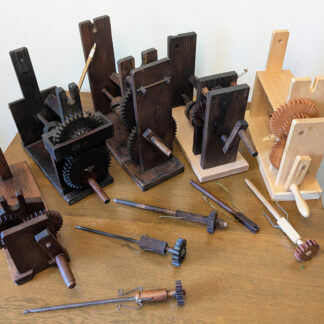
Thai child 6 B wheel back

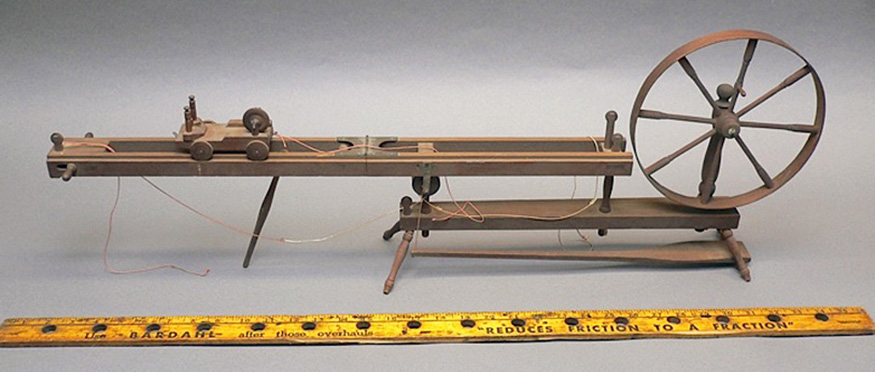
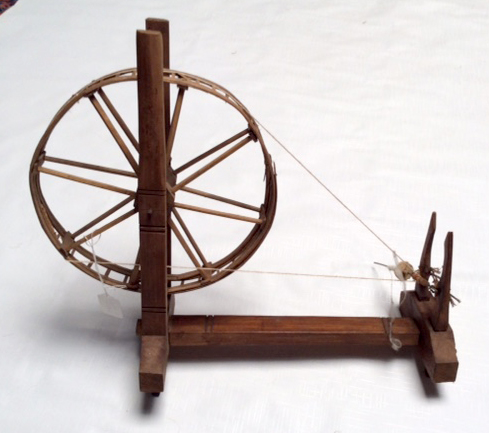
Child-size spinning wheel from Thailand.

Child-size spinning wheel from Thailand. Small wooden frame [14″ x 6″ (~35.5 cm x 15.25 cm)] holds two tall parallel posts. The axle of the drive wheel fits between the posts. The 10″ (~25.5 cm) diameter bamboo drive wheel has eight pairs of spokes set into rim consisting of two parallel bands of bamboo and has a crank. 7″ (~17 cm) spindle at other end of base is attached to two short posts.
Thai child 3 B swift reel

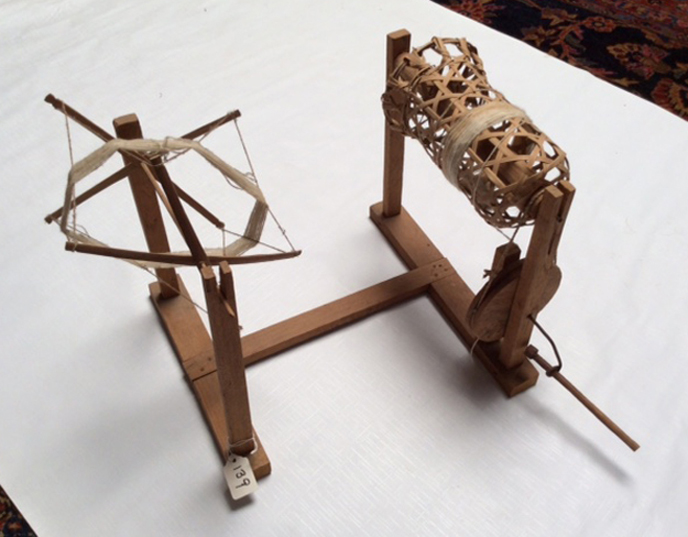
Child-size reel and bobbin.

Small wooden base [15″ x 13¾” (~38 cm x 35 cm)] has at one end two posts with notches at top. Set into the notches is small reel with four arms strung diagonally with cotton thread. At the other end of the wooden base are two more posts holding a bamboo bell-shaped bobbin; attached to one of these posts is a drive-wheel with a metal crank with a wood handle. A heavy drive cord runs from the 4½” (~11.5 cm) -diameter drive wheel to the axle.

Scottish 4 B front 1078

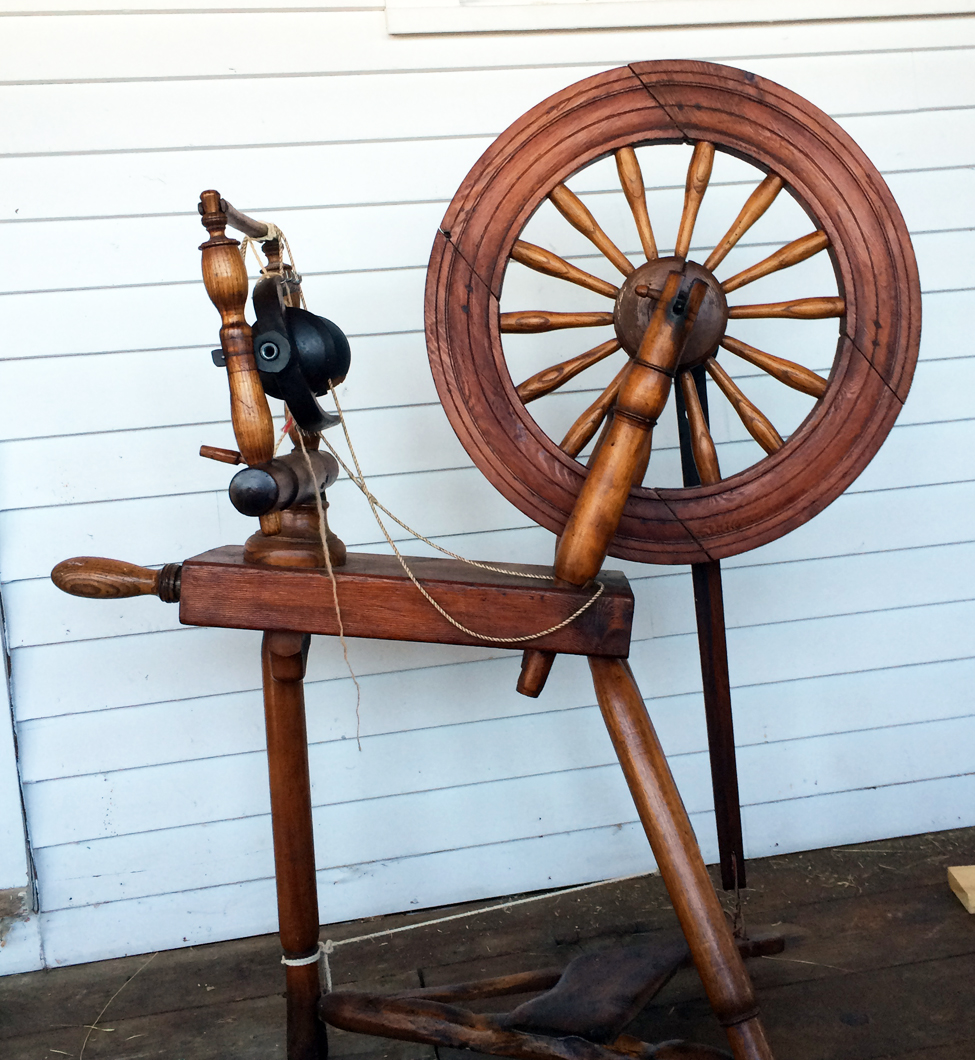
Norman's Hebridean spinning wheel.

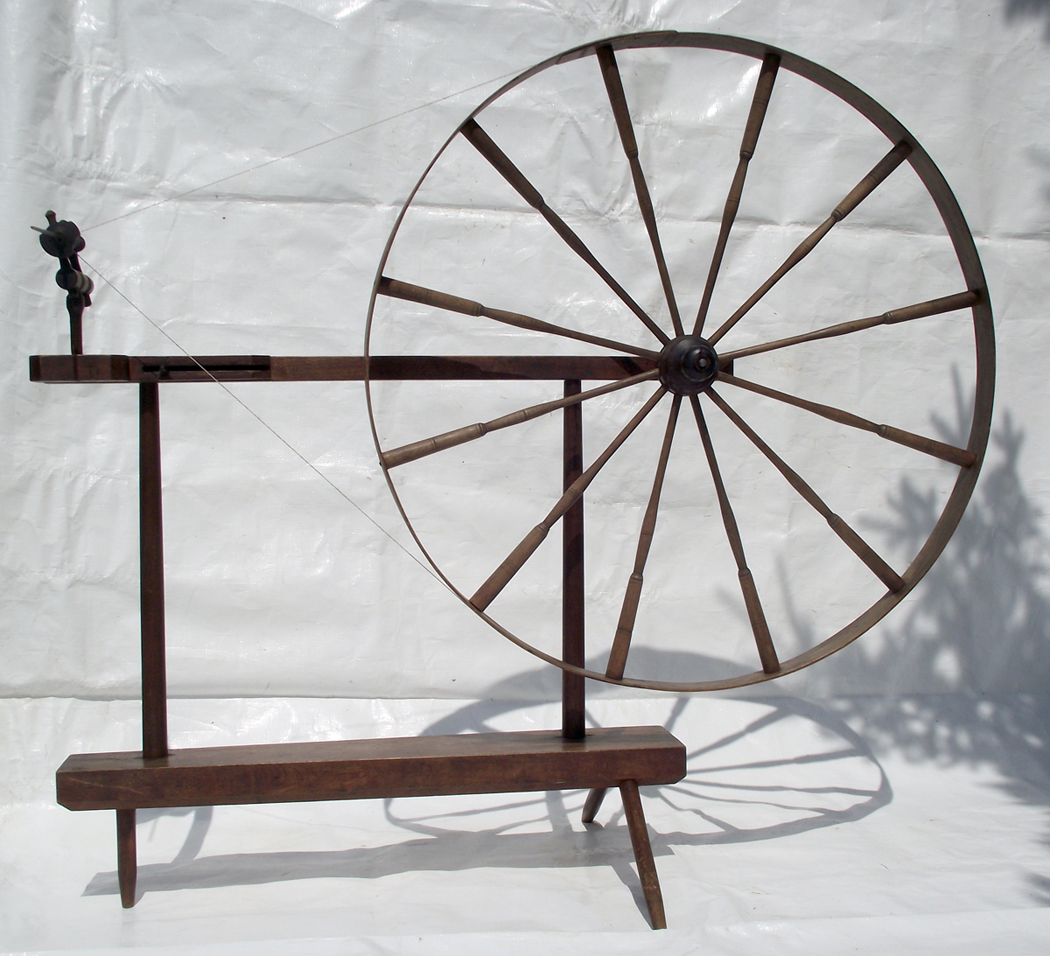
Horizontal treadle wheel with simply turned legs holding a rectangular table. Drive-wheel support posts only slightly slanted. Drive wheel has 14 spokes. Tension screw at end of table, large collar holds the mother-of-all and bobbin/flyer unit; a wooden rod between the tops of the maidens.

SueVanSlyke B 1966

Photograph that came with great wheel marked F. A. FARNHAM

A black and white photograph that came with great wheel marked F. A. FARNHAM. A girl, who appears to be about 6 to 8 years old, perches on the table of a great wheel, which is situated in the corner of a room. She has relatively pale skin and dark hair, and is wearing a fancy dress. There is a window with plants on a table in background.

ACC# 1988-502

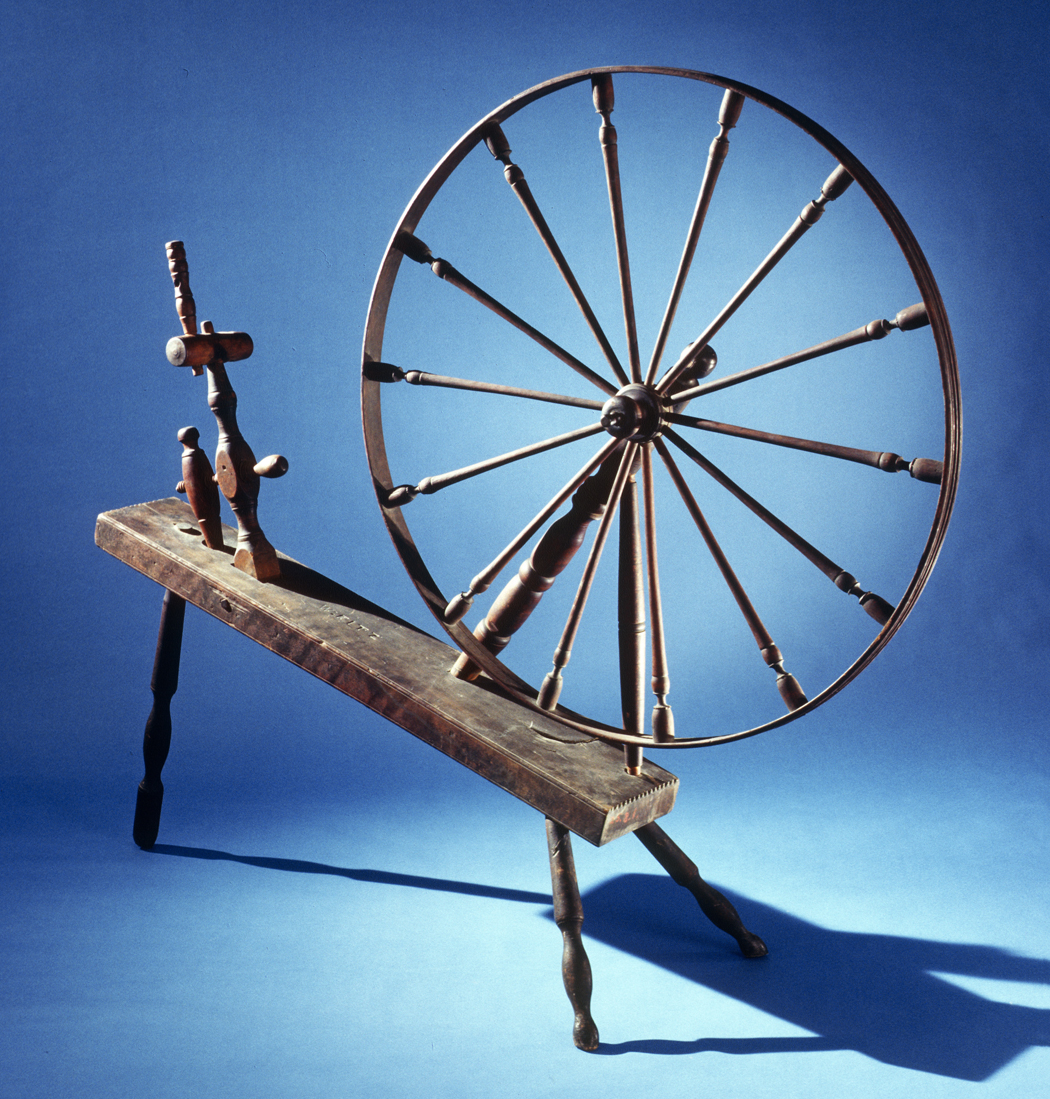
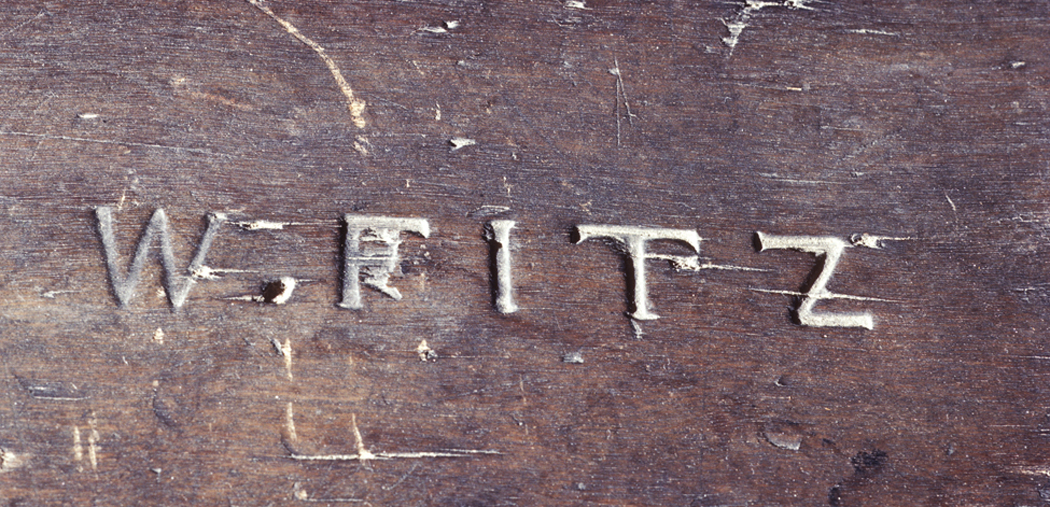
"W. FITZ" mark on top of table.

Stamp of the maker’s mark W. FITZ on the top surface of the great-wheel table.

Hagen 3 B

Norwegian-style spinning wheel built by Manville Hagen of Minnesota.

Norwegian-style spinning wheel built by Manville Hagen of Minnesota. Rectangular horizontal wooden table held by three legs has treadle underneath. Two tall vertical support posts on the right hold the drive wheel which has twelve spokes. On the left of the table two short posts hold a secondary table which contains the mother-of-all.

Friction drive Pic1 B

Friction drive spinning wheel made by Gisborne Engineering Company in New Zealand in 1918.

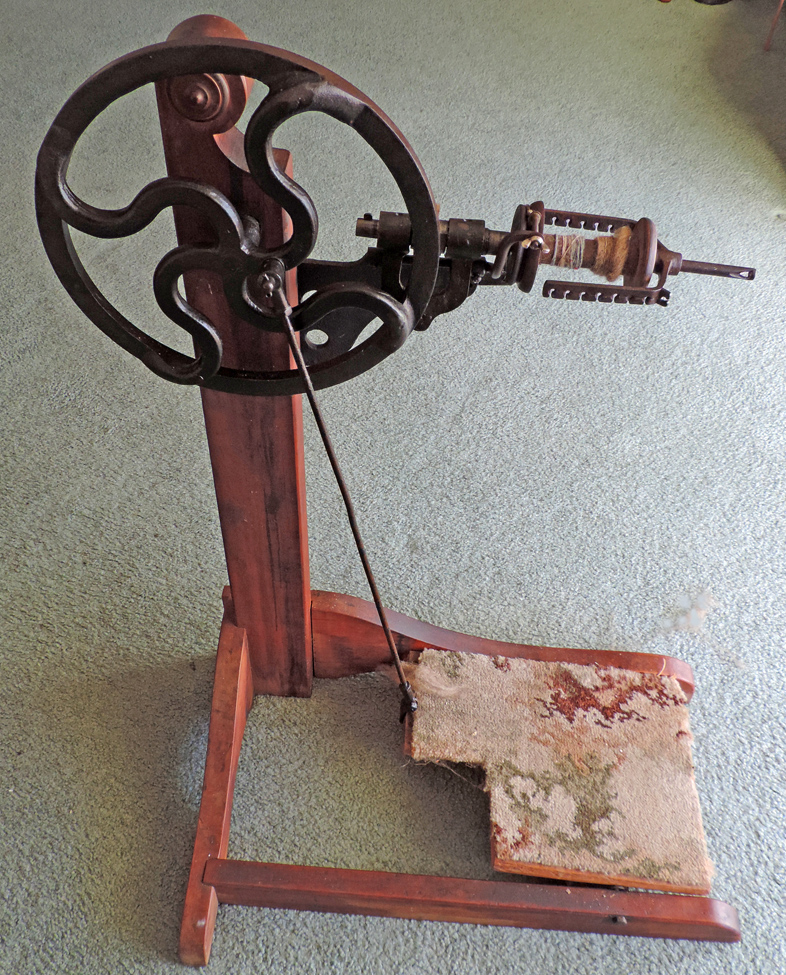
Friction drive spinning wheel made by Gisborne Engineering Company in New Zealand in 1918. A square wooden frame has one upright post on the right hand back corner. A metal wheel is attached to the upright and a rod connects it to a treadle on the front of the frame. In front of the drive wheel is a bobbin/flyer unit that is turned by friction from the drive wheel.

1754 PA Fig 1 B

Flax wheel dated 1754.

Spinning wheel with slanted table and treadle supported by three legs. Slanted wheel supports hold a drive wheel with eight spokes. Incomplete mother-of-all, distaff, and an additional post on the table. All the turned pieces (legs, wheel supports, spokes, and distaff) have round turnings often found on Dutch spinning wheels.

SW1 B Christian using

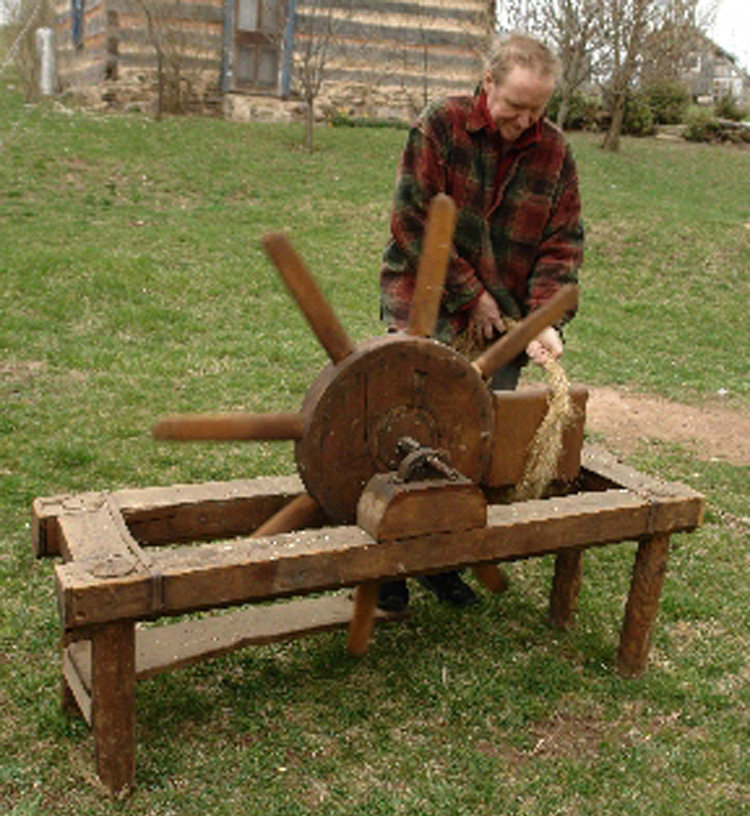
Bro. Christian using scutching wheel ca. 1994.

Brother Christian using a scutching wheel, c. 1994. A man holds a handful of flax straw over a board, next to a large wooden wheel with eight wooden blades set into it. The wheel axle is supported by a wooden table-like frame with a treadle underneath.

RB1 B Christian turns wheel

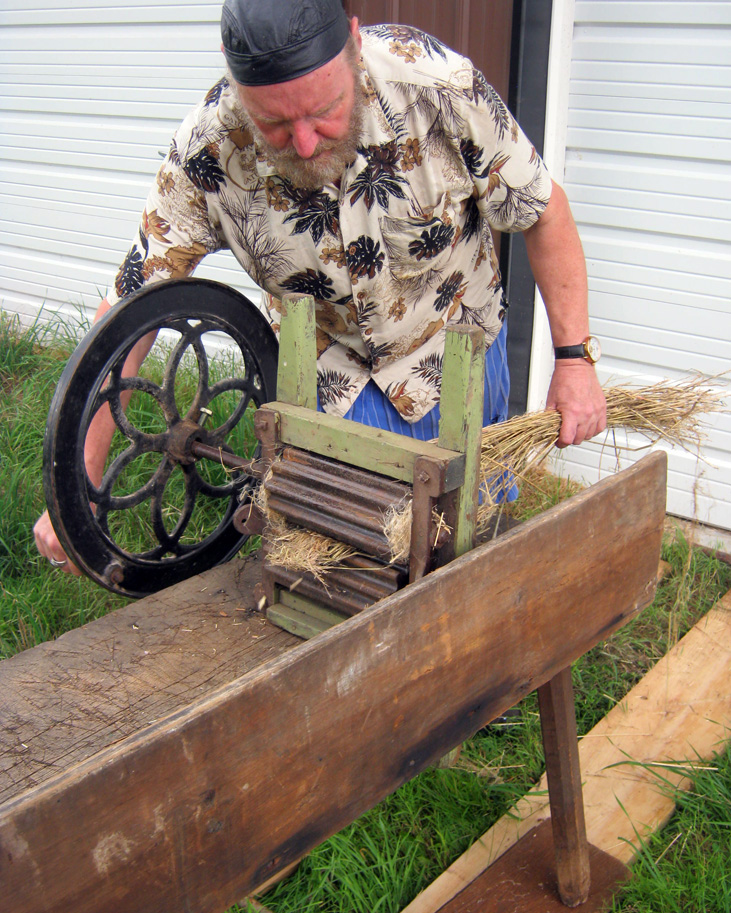
Bro. Christian turning rotary brake.

Brother Christian turning the rotary brake on a scutching wheel, c. 1994. A man holds flax straw in his left hand while he turns a metal wheel with his right. The metal wheel rotates a pair of interlocking cylinders that crush the straw as it goes through. The device with the cylinders is attached to a wooden bench.

Ripple 3 B

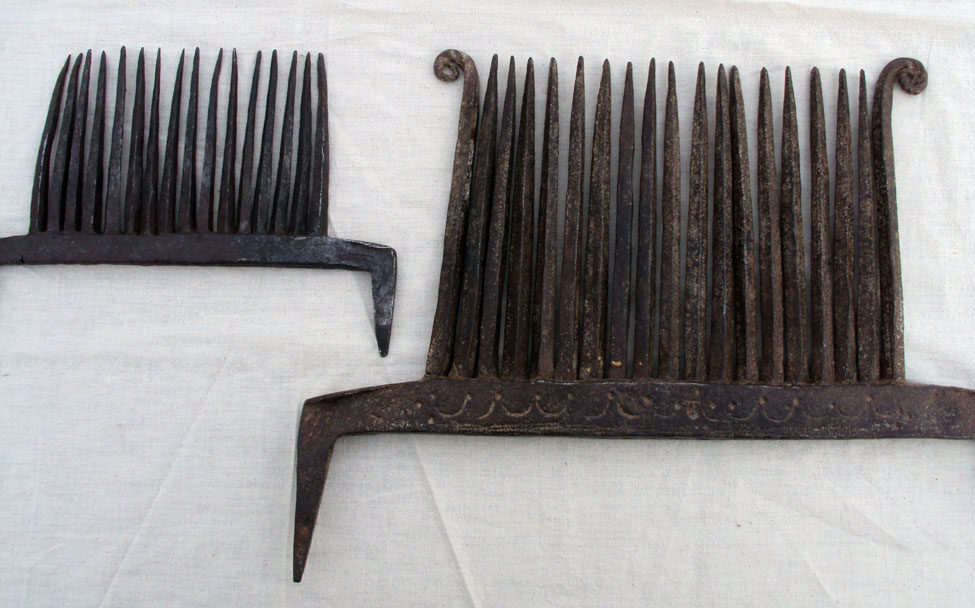
Two early hand-forged ripples, used for removing the seed balls from the pulled and dried flax plants.

Two early hand-forged ripples, used for removing the seed balls from the pulled and dried flax plants. The ripples look like long-toothed combs. The shaft extends beyond the width of the teeth and the ends of the shaft turn at right angles from the body of the shaft to point away from the teeth. The larger of the two ripples has some decorative work on the shaft and the outermost teeth have decorative curls on the ends.

Pierce HATCHEL1 B (1)

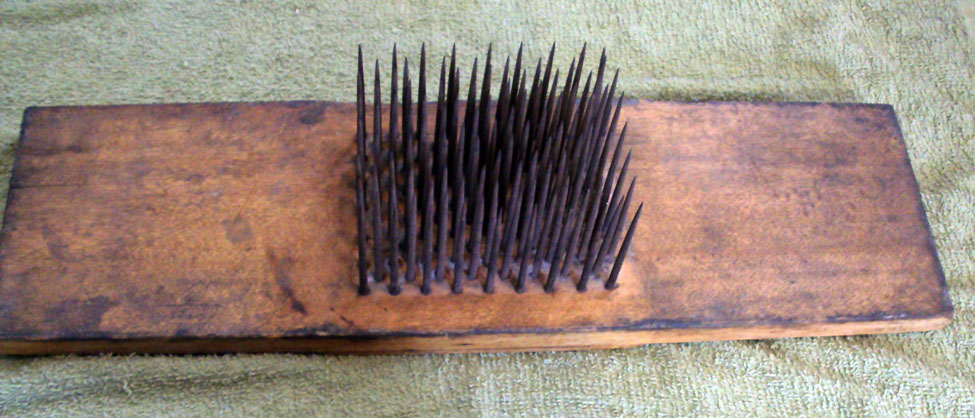
Hackle with stencil on the back side "BENJ. PIERCE/Chesterfield N.H."

Hackle with stencil on the back side “BENJ. PIERCE/Chesterfield N.H.” A wooden base with about 18 staggered rows of 7 or 8 long, pointed, metal teeth.

Flax 1 B-thresh

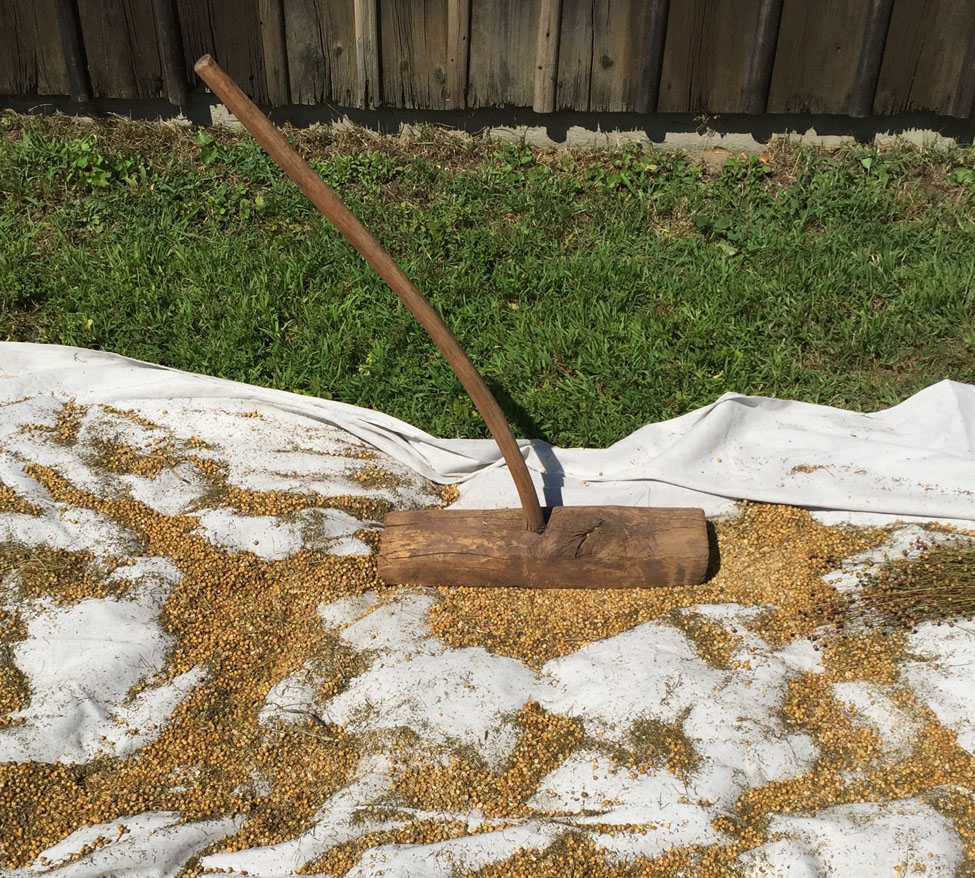
Flail: a long handled wooden tool used to crush the husks of the flax seed balls.

Flail: a long handled wooden tool used to crush the husks of the flax seed balls. Looks like a large mallet with a curved handle.

English hetchel 6 B side 1838

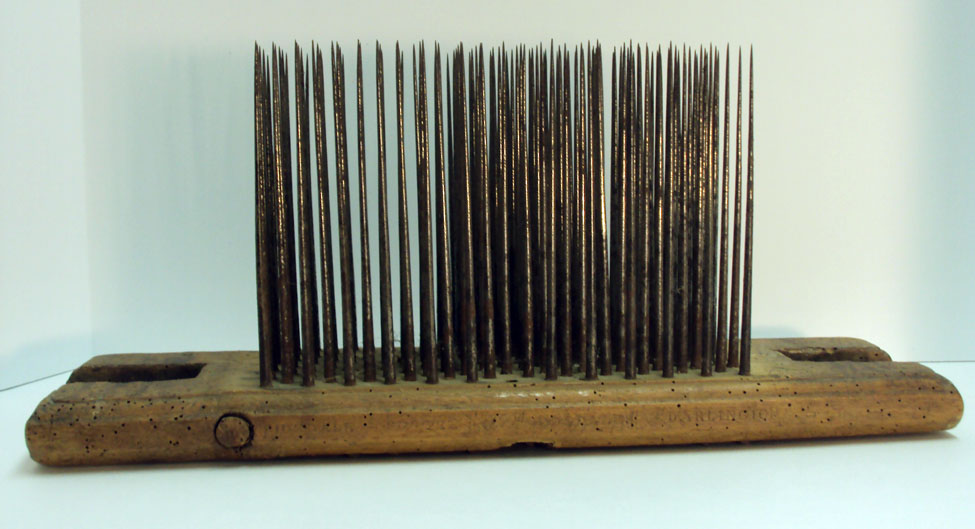
Early 19th century English hackle marked "Ridsdale Porter Darlington."

Early 19th century English hackle marked “Ridsdale Porter Darlington.” A wooden base with at least 4 columns and 25 rows of long, pointed, metal teeth.

nid nod 9.B Pietersz

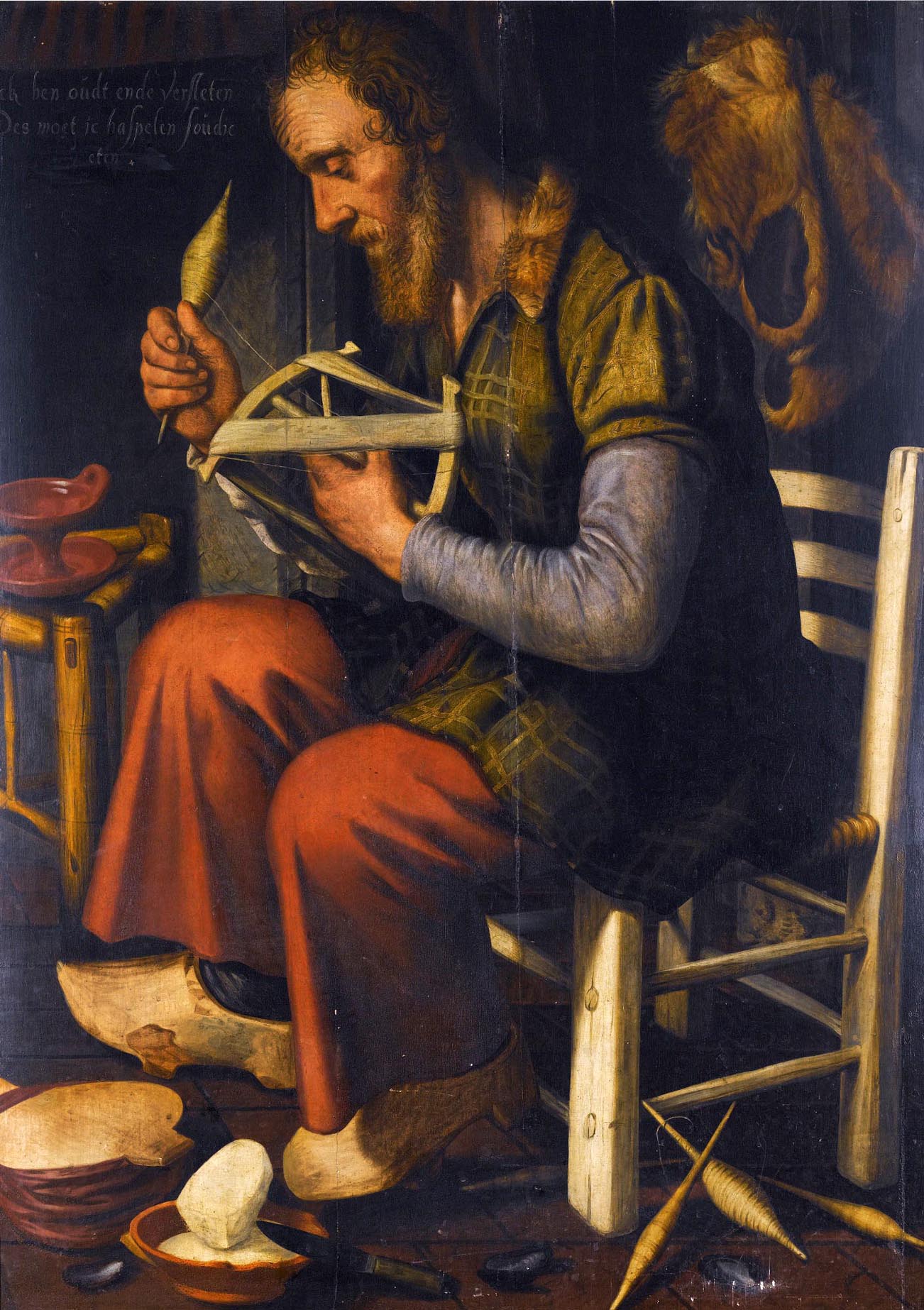
A picture by Pieter Pietersz, a mid-16th century Dutch painter, shows an old man winding yarn off a spindle and onto a niddy-noddy.

A picture by Pieter Pietersz, a mid-16th century Dutch painter, shows an old man winding yarn off a spindle and onto a small cross-reel niddy-noddy (where the crosspieces are at right angles to each other). The man is bearded and wears loose-fitting red trousers, a dark, loose-fitting shirt or tunic, and wooden shoes. He is surrounded by a variety of tools including a small knife and a bellows. There are three full spindles resting by the straight-backed wooden chair he sits in.

nid nod 3 B. Veturia

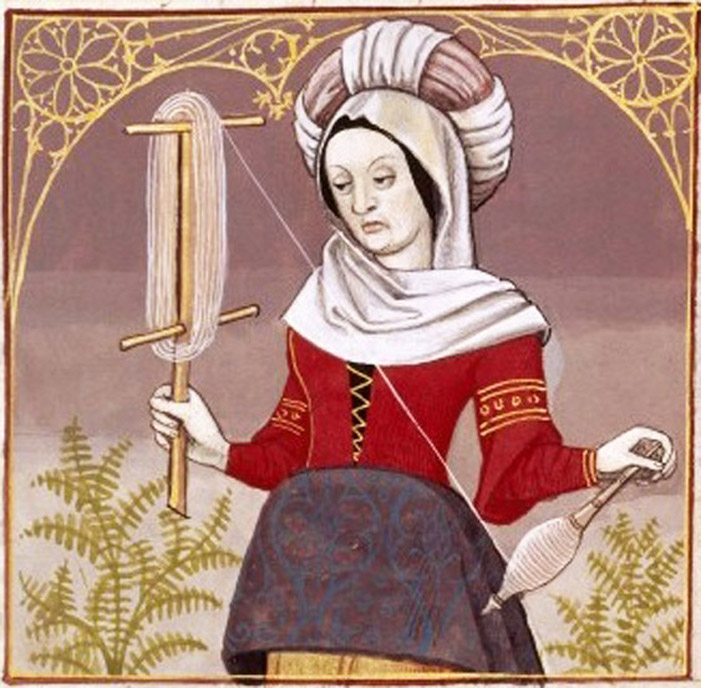
Veturia, the mother of Coriolanus, from a 15th- or 16th-century book about famous women of the past.

Veturia, the mother of Coriolanus, from De Mulieribus Claris (About Famous Women) by Boccaccio, a 15th- or 16th-century book about famous women of the past.
A rather dour looking woman wears a padded roll and veil on her head and a front-laced red bodice over a dark kirtle. She is skeining yarn on a niddy-noddy.

nid nod 2 B. ape

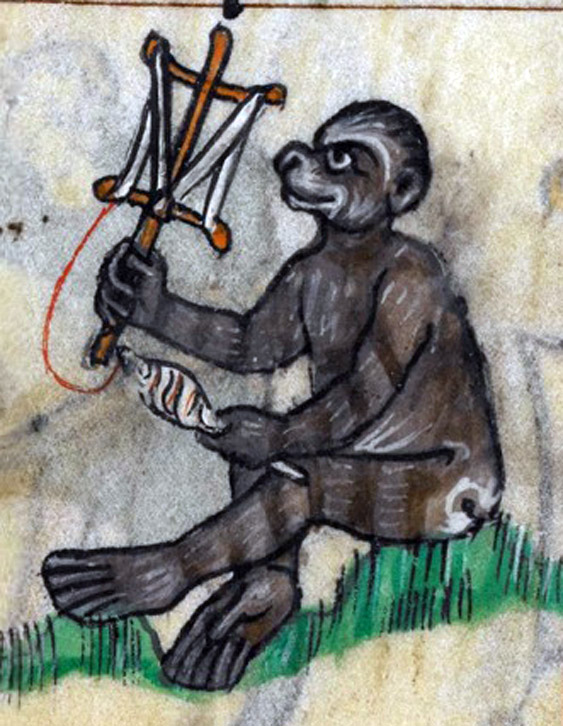
Ape drawn in the margin of Maastricht Hours, a 14th century manuscript, skeining yarn on a niddy-noddy.

Ape drawn in the margin of Maastricht Hours, an early 14th-century manuscript, skeining yarn on a niddy-noddy.

Cumbria Photo1 B_ID659_HuttonSpinningWheel_300dpi

Lady's upright spinning wheel from Hutton-in-the-Forest, a historic house in Cumbria, in northwest England.

Lady’s upright spinning wheel from Hutton-in-the-Forest, a historic house in Cumbria, in northwest England. Single treadle wheel with attached basket distaff. Distaff supports, drive wheel spokes, maiden, and legs all have decorative turning.

Herring 1 B front

Herring spinning wheel

Herring spinning wheel. Single treadle, wooden, bobbin and flyer wheel with three pegs for holding bobbins on the frame.

Lahave great wheel B 002

Square-frame great wheel from Nova Scotia.

Square-frame great wheel from Nova Scotia. The upper and lower sides of the frame extend out a bit beyond the square made by with the sides. The drive wheel is at one end of the upper side and the spindle is on the opposite end. Short legs come off the bottom side of the frame.

cyndy1

Spinning wheel, sitting distaff, and spindle from Hungary

Upright, single treadle spinning wheel, freestanding sitting distaff, and spindle, all from Hungary.

cyndy3

Spindle next to top of distaff with flax

Spindle next to top of distaff with flax.

zuber1

Spooling wheel marked "H. Z."

Spooling wheel marked “H. Z.” Wooden, looks somewhat like a horizontal spinning wheel. It has a boxy structure on the table where the bobbin and flyer or spindle would normally be and has no treadle.

zuber2

Spinning wheel marked "H. Zuber"

Spinning wheel marked “H. Zuber.” Single treadle, bobbin and flyer wheel with attached basket distaff.

swift1

Carlton's swift

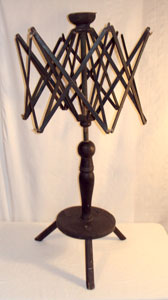
Carlton’s free-standing umbrella swift.